A new tool in the fight against the machine! deflock.me is a great tool to see where flock cameras are installed, alpr.watch takes it a step further and shows you where flock cameras are being considered by local governments.
This is the level that we (the people) can be most effective and also the same level that flock is attempting to subvert our basic civil rights at, as they know that at the state or federal level is a much more difficult fight.
So I’ve been following Daniel for years now and subscribe to his weekly email, “Unsupervised Learning”. Some good stuff.
Daniel has a been working on some pretty ambitious ideas, including “Humans 3.0″… the melding of AI and the human being using a bunch of programs.
For me, it’s that last part that gives me the idunnos. Not that I have a better idea, but using a computer to add a value layer to the human/computer interface seems a bit biased.
Still, I encourage you to look into his work, there is a lot of effort here and undoubtedly anyone could find a significant new understanding of the transitioning digital world from it. Thanks, Daniel!
Remember these fucking cowards. Traitors to their “Party”.
Not that I give two shits – both parties are corrupt to their core and the concept of “America” died years ago – replaced with U$A!U$A!U$A!
Fetterman is a perfect example of the kind of wishywashy bullshit that we are presented as ‘choice’.
*SAD*
Sens. Angus King, Tim Kaine, Dick Durbin, John Fetterman, Magie Hassan, Jeanne Shaheen, Catherine Cortez Masto and Jacky Rosen — none of whom are up for reelection 2026 — voted Sunday to support a short-term funding bill that would reopen the government through Jan. 30.
“Oh boy, where do I even start? After 8 years as an auto insurance agent, I have zero loyalty left to protect these companies.
We Had “Loyalty Lists” Every month, I’d get a report of customers who hadn’t shopped around in 2+ years. These were our golden geese – we could raise their rates aggressively because they’d proven they wouldn’t leave. One customer I remember was paying $3,200 annually for coverage that should have cost $1,800. She stayed for 5 years.
The “File and Use” Scam Here’s something most people don’t know: in many states, insurance companies can raise your rates immediately and justify it later. We’d implement 15-20% increases across entire ZIP codes, knowing regulators would take months to review. By then, we’d collected millions in extra premiums.
Claim Frequency Was Irrelevant Your rates weren’t really based on how often you’d claim – they were based on how likely you were to shop around. A customer with 3 claims who got quotes every year paid less than a claim-free customer who never compared rates. It was pure price discrimination.
We Loved Policy Confusion Complex policy language wasn’t an accident. The more confusing your coverage, the less likely you’d comparison shop effectively. We’d change terminology between companies deliberately to make apple-to-apple comparisons nearly impossible.
The Real Game-Changer Tools like ComparisonAdviser absolutely terrify insurance companies because they eliminate our biggest advantage: information asymmetry. When customers can instantly see what competitors charge with identical coverage and discounts applied, our whole “loyalty tax” model collapses.
I’ve watched too many good people get fleeced by an industry that profits from customer ignorance. Use ComparisonAdviser religiously – it’s the only way to beat a system designed to exploit your trust.”
Install WinGet WinGet the Windows Package Manager is available on Windows 11, modern versions of Windows 10, and Windows Server 2025 as a part of the App Installer. The App Installer is a System Component delivered and updated by the Microsoft store on Windows Desktop versions, and via Updates on Windows Server 2025. Note The WinGet command line tool is only supported on Windows 10 version 1809 (build 17763) or later. WinGet will not be available until you have logged into Windows as a user for the first time, triggering Microsoft Store to register the Windows Package Manager as part of an asynchronous process. If you have recently logged in as a user for the first time and find that WinGet is not yet available, you can open PowerShell and enter the following command to request this WinGet registration:
So here’s the: How to use a Fortigate box to block annoying ads in your network.
Add external filter lists
Set up a DNS filter, block the external filter lists
Set up a DNS server on the Fortigate with the DNS filter enabled
How it’s done
This is all done on a Fortigate firewall with firmware 6.2.5
External lists
First we add the external lists. I currently use 8 lists, which are a mix of advertisers and trackers.
Connect to you box using SSH. At the CLI you can paste this:
config system external-resource
edit “Disconnect-Ad-Filter”
set type domain
set category 194
set resource “https://s3.amazonaws.com/lists.disconnect.me/simple_ad.txt”
set refresh-rate 60
next
edit “AdGuard”
set type domain
set category 192
set resource “https://v.firebog.net/hosts/AdguardDNS.txt”
set refresh-rate 60
next
edit “Firebog”
set type domain
set category 193
set resource “https://v.firebog.net/hosts/Easylist.txt”
set refresh-rate 60
next
edit “Firebog-Privacy”
set type domain
set category 195
set resource “https://v.firebog.net/hosts/Easyprivacy.txt”
set refresh-rate 60
next
edit “Fireblog-Admiral”
set type domain
set category 196
set resource “https://v.firebog.net/hosts/Admiral.txt”
set refresh-rate 60
next
edit “Fireblog-Privacy-2”
set type domain
set category 197
set resource “https://v.firebog.net/hosts/Prigent-Ads.txt”
set refresh-rate 60
next
edit “OISD”
set type domain
set category 198
set resource “https://dbl.oisd.nl/”
set refresh-rate 60
next
edit “OISD-IP”
set type address
set resource “https://hosts.oisd.nl/”
set refresh-rate 60
next
end
config system dns-server
end
DNS Filter
Next we add a DNS filter. You can do this under the ‘Security Profiles’ tab in the GUI of the Fortigate. Enable the option FortiGuard Category Based Filter
In the category filter list you can see an entry called ‘Remote Categories’. Open this entry, you will find seven of the external entries we added before. Set all of them to ‘Redirect to Block Portal’.
At the bottom of the menu you find the option External IP Block lists. Click at the + sign and select the entry ‘OSID-IP’.
Now, all eight lists are active in this DNS filter profile.
Set up a DNS Server
Setting up a DNS server is most easy done by CLI (like most of things). Paste this code to your CLI to setup the server. Change the dnsfilter-profile to the name of your DNS profile.
edit “internal”
set mode forward-only
set dnsfilter-profile “Your-DNS-Filter”
next
After setting up your DNS server, don’t forget to publish it with your DHCP.
That’s it
Now you should notice much less ad bothering. Either by web browser or by app on your mobile.
With these simple steps you can get rid of most ads. YouTube ads cannot be blocked this way.
I like the hint option… way better than questions, IMO.
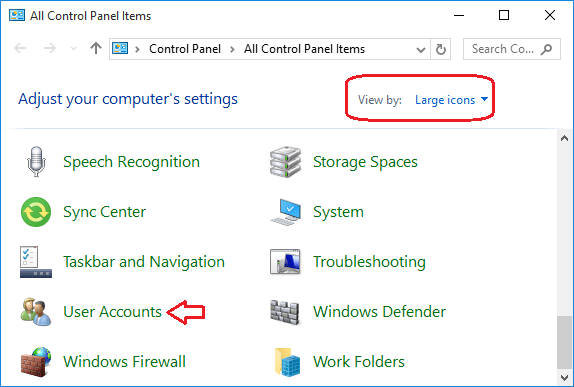
It’s super easy to set up a password hint when you change or reset your Windows user password. Follow these steps:
Open the Control Panel. Set the View by option to Large icons. Click on User Accounts.
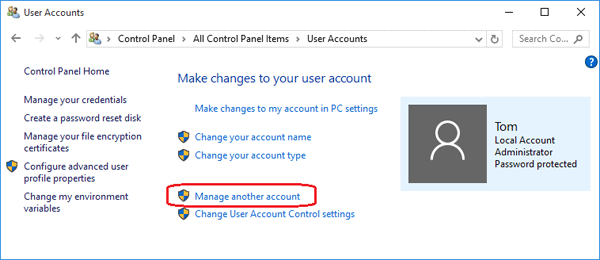
Once on your user account page, click on the Manage another account link at the bottom.
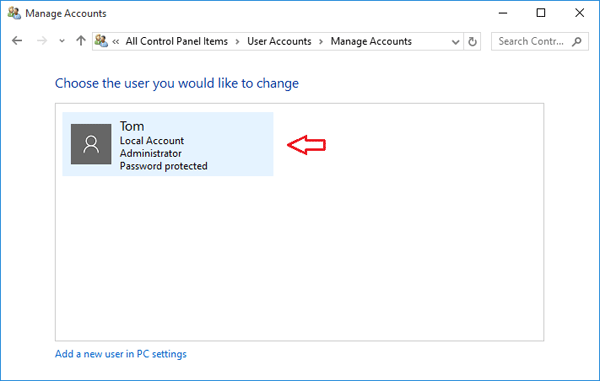
Click on the user account whose password hint you want to create or change.
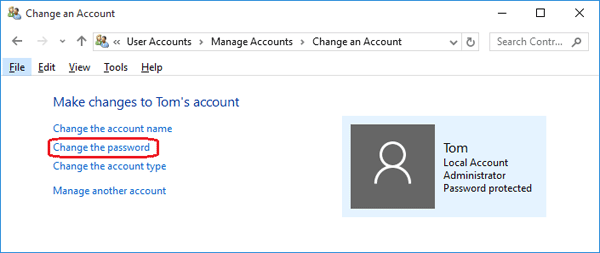
In the next window, click on Change the password.
Type your current password and set a new password. Next enter a word or sentence for your password hint that will help you (and you only!) remember your password. Click Change password when you are done.
Hosted VPS is the new hip homelab, now that the plebs are homelabbing. RackNerd has some great prices on hosted VPS using the link below.
Also should mention Oracle’s Free Cloud Tier where you can get a 4-core, 24GB machine with 200GB storage for free. I’ve had one for three years without ever being charged.
Honestly, there are good reasons for both. And Hostinger, too!
I really am trying to improve my attitude about things… as one ages it seems there is a natural tendency to become somewhat jaded, and as I’ve never been one to jump on board a trend, I’m gonna try and fight it.
To that end, fuck edge and chrome.
Those sonsofbitches can suck a stone. Enough! There are other, better, options. We’ve all known about them for years now. If not for that goddamned inertia thing.
Well, listen up punk. The man has been so up in your stuff it no longer qualifies as your stuff. It’s theirs. They own your colon. : <- Owned by them.
The straw for me was the fact that Chrome will not save your browsing history for longer than 90 days. I mean, sure, Google will save your shit forever, and sell it to whomever. But as far as letting you browse your OWN FUCKING BROWSER HISTORY, no… you get 3 months and then it is trashed.
There seems to be a ‘hack’ to get firefox to save your history ‘forever’, but even there you have to give it an actual number of pages to save, so no… not forever (although, I put 9,999,999 into the field you have to hack into firefox’s config, so yeah… forever).
I’ve been moving to Brave for the past few weeks as it still shitcans YouTube ad’s (Chrome recently stopped allowing ad-blockers to work on youtube.com), but it seems Brave has brought the 90 day limitation over from Chromium.
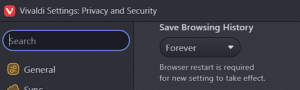
Vivaldi, which is also based on Chromium, does not have a problem with setting your browser history to ‘Forever’. Thank the Gods.
This year we will also continue to offer Linspire for free on December 25. Christmas day the download is made available free of charge for 24 hours. We have done that every year since we started making Linspire. We will continue to do so for as long as we make it.