Title says it all. Lets try it out, what could go wrong?
Source: How to Run OpenClaw on Oracle Cloud with Ollama for Free | by Shoumik Goswami | Towards AI
|
||||||
|
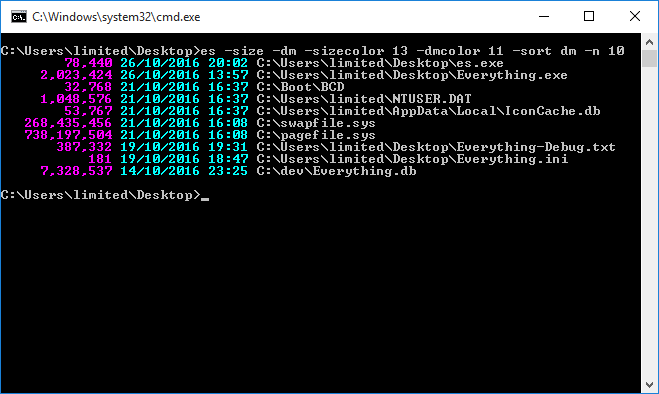
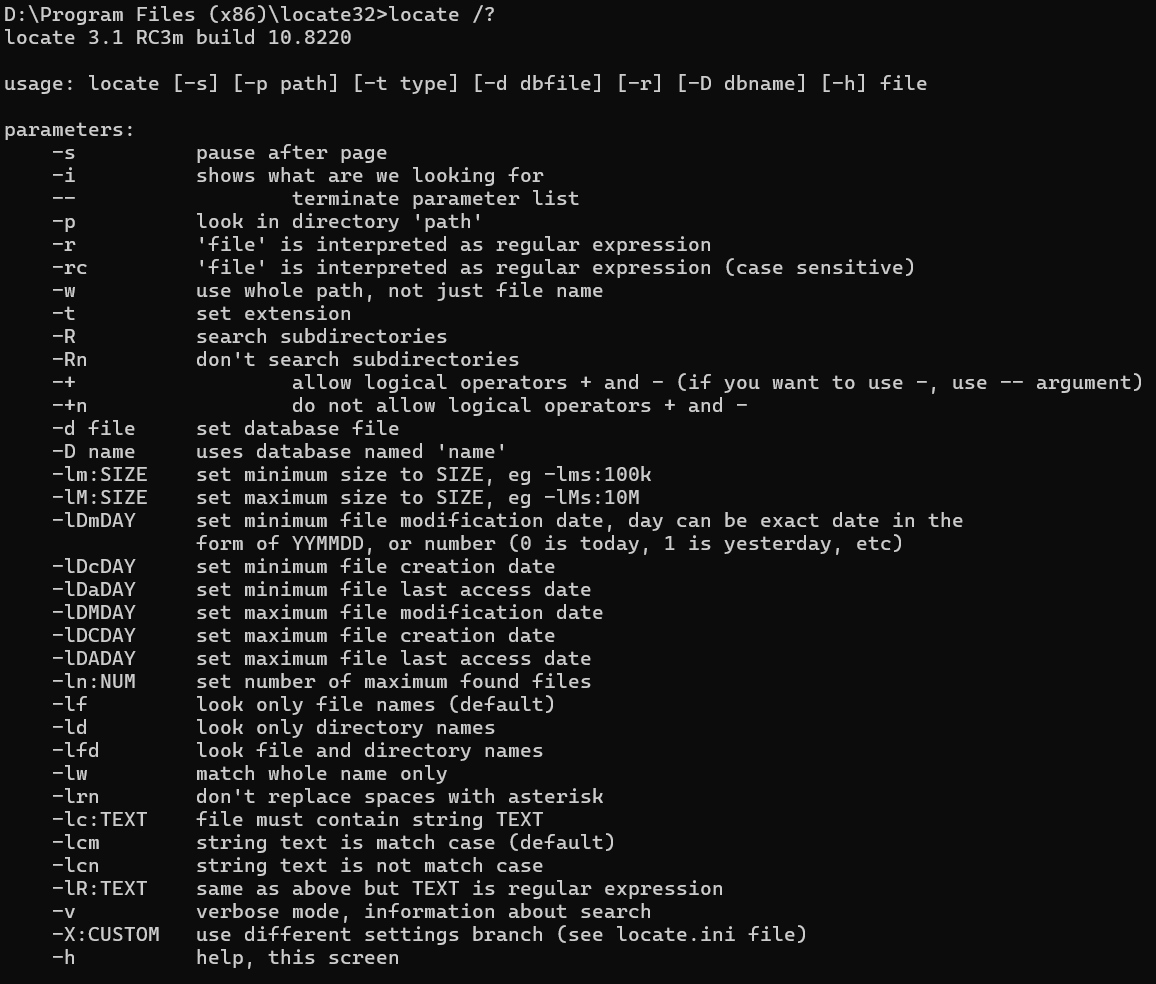
Title says it all. Lets try it out, what could go wrong? Source: How to Run OpenClaw on Oracle Cloud with Ollama for Free | by Shoumik Goswami | Towards AI Amazing selection of period accurate (looking) wires. Source: About Our Harnesses | About Vehicle Harnesses | Autosparks I’m a Locate32 fan, from way back. Sure, I’ve tried Everything, but it is so heavy compared to Locate. Always running and for what? I know where everything recent is. Continuous indexing is not needed (in a normal single user environment). When I’m looking (like, using a program to find it “looking”), it is for old stuff. Locate32 indexes on demand and only take a few minutes, so you can do it as part of your sleuthing process. However, this project, which adds command line functions to Everything, might get me to rethink things…
Source: GitHub – voidtools/ES: Everything Command Line Interface · GitHub
LOL – Locate32 has had it all along!
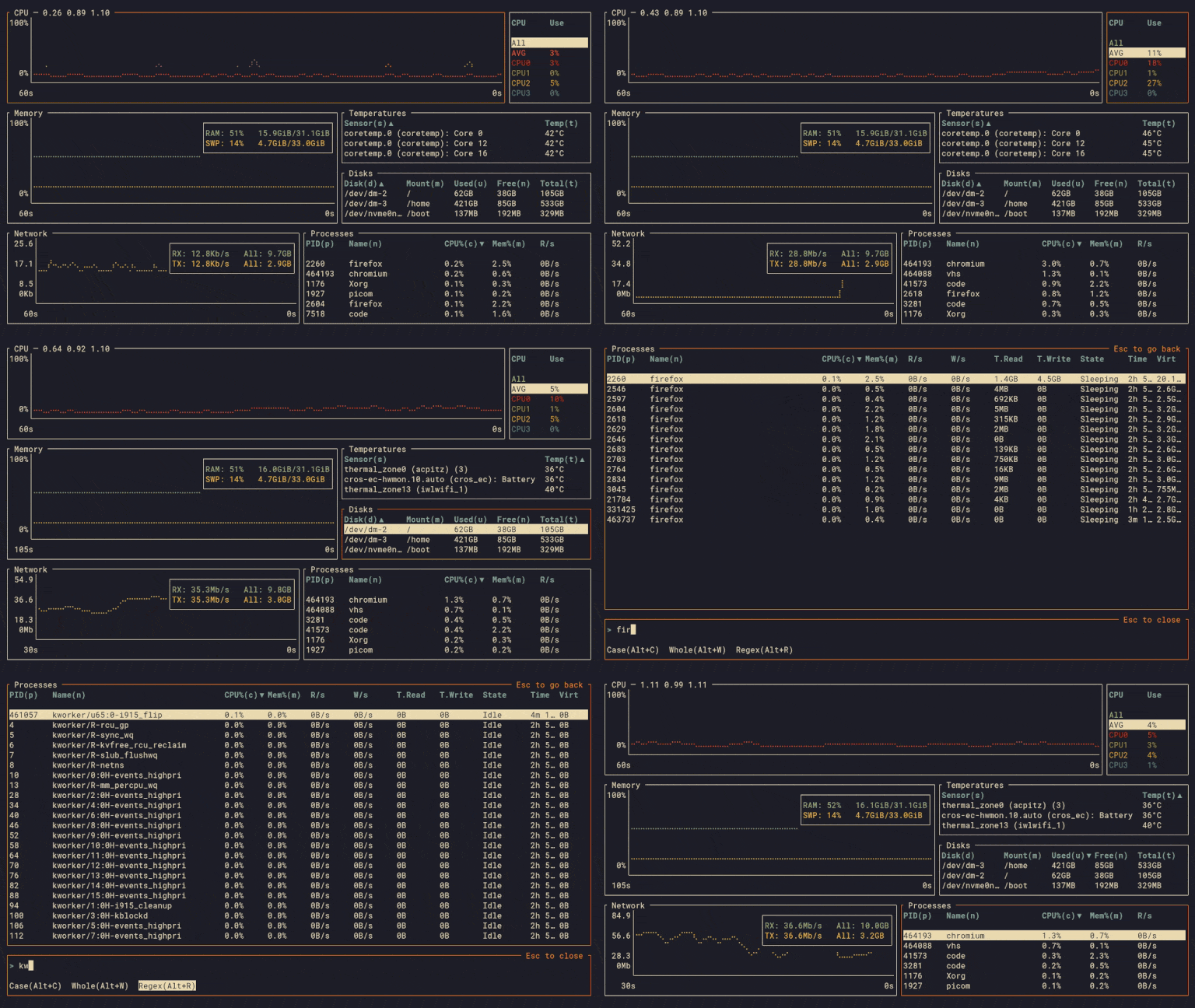
I have not checked this out yet, but looks nice!
Source: GitHub – ClementTsang/bottom: Yet another cross-platform graphical process/system monitor. · GitHub I think I finally found one of those quote thingies I can put at the bottom of my email! “The industry is asking you to own nothing and be happy. Computers are no longer a bicycle for the mind. They are becoming the self-driving car that takes you directly to the destination.” – Nirav Patel Couldn’t agree more with this article. My 2016 F06 640GC is quite the ride and just as easy to maintain as my other BMWs. And best of all, this was the last platform for the N55, ergo, the most refined version of the engine, and the car comes with the older iDrive system. The M6 pushes it too far in my opinion, with that terrible hot 8 engine which, in reality, almost never gets to be fully utilized. It does make a glorious sound at red lights, but otherwise it is simply over the top in all regards compared to the 640. $4000 a wheel carbon ceramic brakes? For what? The 640 ($250/wheel) will break hard enough to trigger antilocks at the same distance that the M6 will trigger it’s antilock – that is under the control of the tires, so you never really get to use those expensive brakes unless you are tracking the car. And lets be honest, this is NOT a track car in any way. My ’15 F32 is 5000% a better track car, and it is not even the M version of that line! So get the non-M version with perhaps some of the finer features if you can find them (upgraded leather, B&W radio) and none of the extra crap (lane control, adaptive cruise, etc), and enjoy one of the best cars from what will surely be known as the “peak car” era. The coupe lost value the quickest, and is quite close to bottom at this point. The convertible seems a car without a cause, no one wants to sit in the back of a convertible… it sucks, even if this one has enough room for adults, they still don’t want to be back there. The GC, or sedan as the rest of the world would call it, at least offers a hint of usable rear seats, but more frequently is where I put the groceries as you are not supposed to put any liquid in the trunk as that is where the computers are. Of course. Typical to many $100k cars, these have likely been taken car of and were not the prior owners daily driver, so low mileage examples are all over the place. And the best part of all? BMW choose to outfit the platform with the older 3G Telemetry, so now the car is no longer connected to their servers! Yea!
Source: BMW Built One of Its Most Beautiful Cars Ever — Then Just Retired It A quick python script to eat up some cpu. Run with this command to use more cores: powershell: linux: python:
def stress_test_pi(): print(“Starting Pi Stress Test… Press Ctrl+C to stop.”) pi = Decimal(0) try: # Print every 1000th iteration to avoid I/O bottlenecks k += 1 if __name__ == “__main__”:
Rebex has a couple nice and tiny servers (Web, FTP, sFTP) that are handy in a pinch. I have been running one alongside a PRTG installation without any hiccups. Interesting! Need to cultivate the prompt even more, but here is a great start:
Source: Play solo D&D with ChatGPT as your Dungeon Master — Mind the Dungeon Free satellite imagery tools covered in this video : Long winter nights next to the fire are a staple on Toms Lane. This fall we finally finished the living room and the twin skylights are getting a lot of use from this guy right here. Venus was blazing recently, and Orion framed perfectly the other week. Laying there on my couch I had a thought:
Some links: https://www.cloudynights.com/classifieds/ Bunch of freaky pervs running the internet anymore. This world is fscked.
Today’s Sittin’round Saturday activity!
Source: How to Make Your Own J.A.R.V.I.S. With a Raspberry Pi : 5 Steps – Instructables Only $250/yr per user – What a bargain! Fools and the witless abound! Wise up people – This is where stupiding takes us.
I implore anyone reading this to spend the time listening to these two significant Hidden Brain shows (I guess the kids call ’em podcasts). The very fact that you are here suggests you spend way too much time in front of a screen, as we all do now. Anxious? Bummed? Bored? Or perhaps you know someone who is dealing with this stuff? The two part program is a bit of a ask on time, (60min & 90min), so listen when you have time to listen, and have a open mind.
EasySpeak is available right now on GitHub. Source: This new Linux app lets you control your PC with your voice, and it’s free I have one Windows 11 machine that is constantly requiring me to change my passwords. Only this one machine… and like every ficking time I log in! Two ways to disable this. 1) Command Prompt -> “net accounts /maxpwage:unlimited” 2) lusrmgr.msc Automatic License Plate Reader Watchlist A new tool in the fight against the machine! deflock.me is a great tool to see where flock cameras are installed, alpr.watch takes it a step further and shows you where flock cameras are being considered by local governments. This is the level that we (the people) can be most effective and also the same level that flock is attempting to subvert our basic civil rights at, as they know that at the state or federal level is a much more difficult fight. If you know, then do something! Source: alpr.watch | alpr watch – Track Surveillance Tech in Local Government Meetings |
||||||
|
Copyright © 2026 If I only had a brain - All Rights Reserved Powered by WordPress & Atahualpa |
||||||